Thursday, November 25, 2010

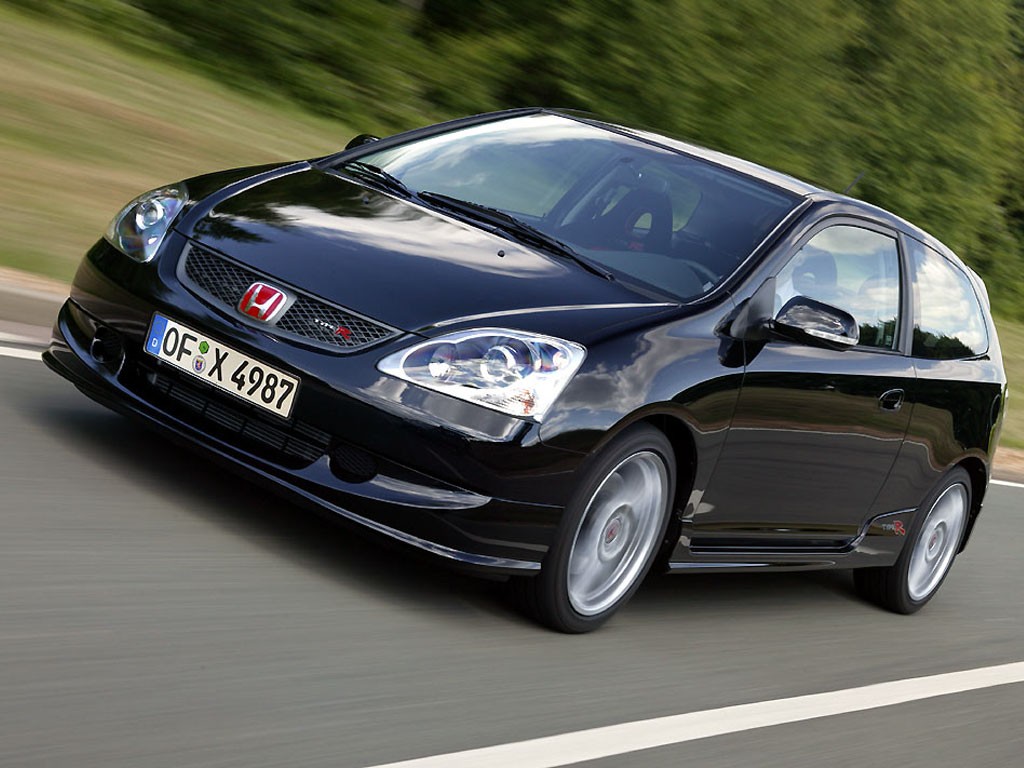
Honda Civic Fast Cars

The Honda Civic is a line of subcompact and subsequently compact cars made and manufactured by Honda. In North America, the Civic is the second-longest continuously-running nameplate from a Japanese manufacturer; only the Toyota Corolla, introduced in 1968, has been in production longer. The Civic, along with the Accord and Prelude, comprised Honda's vehicles sold in North America until the 1990s, when the model lineup was expanded. Having gone through several generational changes, the Civic has become larger and more upmarket, and it currently slots between the Fit and Accord.

It was introduced in July 1972 as a two-door coupe, followed by a three-door hatchback that September. With the transverse engine mounting of its 1169 cc engine and front-wheel drive like the British Mini, the car provided good interior space despite overall small dimensions. Early models of the Civic typically included a basic AM radio, heater, foam-cushioned plastic trim, two-speed wipers, and painted steel rims with a chromed wheel nut cap. As the years went by, it has become much more upscale with options such as air conditioning, power locks, power windows, leather upholstery, satellite-linked navigation, and a six-speed manual transmission. Initially gaining a reputation for being fuel-efficient, reliable, and environmentally friendly, later iterations have become known for performance and sportiness, especially the Civic Type-R, Civic GTi and Civic SiR.

The Civic has been rebadged for international markets with such models as the Honda Ballade and Honda Domani/Acura EL. The Civic platform also served as the basis for the CR-X sport compact, the CR-X del Sol targa convertible, and the CR-V compact SUV.

As of 2008, the Civic has been the top-selling car in Canada for eleven straight years.[4][5] With high gas prices and a weak economy in June 2008, the Civic supplanted the Ford F-Series to become the top-selling vehicle in the United States for that month.

Civic sales in Japan are ending with the gas version ended in August 2010 and hybrid in December.International versions and hybrids will continue to be manufactured for sales outside of Japan.

honda civichonda civic
honda civichonda civic runing
honda civichonda civic wonderful cars
honda civichonda civic wallpapers

Wednesday, November 24, 2010

HONDA HSV-010 GT (2010)

Click Thumbnail to download (size 1600 x 1200 pixels)


Honda HSV-010 GT

Technical Specifications

* Dimensions
o Length: 4675 mm
o Width: 2000 mm
o Vehicle weight: 1100+ kg
* Engine
o Engine name: HR10EG
o Configuration: Liquid-cooled, naturally aspirated, longitudinal V8
o V angle: 90°
o Valve train: Gear-driven DOHC - 2 intake and 2 exhaust valves per cylinder
o Displacement: 3397 cm3
o Bore x stroke: 93.0 x 62.5 mm
o Maximum output: 500 PS (370 KW)
o Maximum torque: 392 Nm
o Throttle control system: Mechanical
o Fuel supply system: Programmed fuel injection system (Honda PGM-FI)
o Fuel: Lead-free premium gasoline
o Lubrication: Dry sump
* Powertrain
o Transmission mechanism: Constant mesh
o Transmission shifting method: Steering paddle shifter
o Steering system mechanism: Rack and pinion system with electric power steering (EPS)
* Tires
o front: 330/40R18
o rear: 330/45R17
* Brake type and mechanism: Hydraulic ventilated disc system
* Suspension system: Double wishbone
* Stabilizer: Torsion bar

HONDA Odyssey Concept (2010)

Click Thumbnail to download (size 1600 x 1200 pixels)


HONDA Odyssey Concept (2010)
The Honda Odyssey Concept, on display at the 2010 Chicago Auto Show, introduces a sleek and distinctive exterior styling direction for the next generation of the industry's best-selling minivan, set to debut this fall, American Honda Motor Co., Inc., announced today.

The Honda Odyssey Concept dramatically departs from conventional minivan styling with its low and wide stance, highlighted by a "lightning-bolt" beltline that further distinguishes the vehicle's profile. Compared to the 2009 Honda Odyssey, the Concept's slightly lower roofline (-1.0 inch) and wider stance (+1.4 inch) contribute to a sleeker, stronger and more dynamic presence with improved aerodynamics that help increase fuel economy. Forthcoming improvements to the production Honda Odyssey's interior are designed to further enhance the current model's accommodating space for people and cargo.

"The Honda Odyssey established its reputation by providing families with what they most want in a minivan - great functionality, an emphasis on safety and good fuel economy," said Vicki Poponi, assistant vice president of American Honda product planning. "Honda Odyssey then further delighted customers with its surprisingly engaging, fun-to-drive and dynamic nature. The next-generation Honda Odyssey promises to take these strengths to a higher level while adding more style and personality."

The steeply raked front and rear roof pillars, unique side-glass profile, chamfered roof line, and tapered rear cabin shape combine to create a dynamic and distinctive appearance from any perspective. The lightning-bolt beltline dives toward the rear of the vehicle emphasizing the new Honda Odyssey's sporty appearance while enhancing outward visibility for third-row passengers. Aggressive body-to-wheel proportions reduce the perception of vertical height common to most minivan designs. Fender flares further accent the vehicle's securely planted and stylish persona. The concept vehicle's projector beam headlights, LED taillights and form-fit fog lights further heighten the sophisticated quality of the design.

Enhanced aerodynamics and advanced powertrain technologies will contribute to the next-generation Honda Odyssey's increased fuel efficiency. The all-new 2011 Honda Odyssey is expected to achieve an EPA-estimated fuel economy rating of 19 city/28 highway miles-per gallon on select models (preliminary estimate determined by Honda).

Currently in its third generation, the Honda Odyssey's unique array of features, including its superior driving dynamics, 3rd-Row Magic Seat® and efficient i-VTEC™ V-6 engine with three-mode Variable Cylinder Management™ (available) all combine to offer a sophisticated environment with room for up to eight people (seven on Odyssey LX). The Odyssey has been America's best-selling minivan since 2008 and is produced exclusively in Alabama by Honda Manufacturing of Alabama (using domestic and globally sourced parts). Both the concept and production vehicles, along with all development activity for the 2011 Odyssey, are being designed at Honda R&D Americas in Torrance, California, and Raymond, Ohio.

The Honda Odyssey has won numerous awards and critical acclaim. Recent accolades include the Edmunds.com 2010 "Top Recommended" minivan award, U.S. News and World Report 2010 "Best Minivan for the Money" award, Automotive Lease Guide 2010 "Best Minivan for the Money," the Kelley Blue Book award as one of the ten "Best New Family Vehicles of 2009" and "2009 Best Resale Value Award" in the van category, which recognizes vehicles that are expected to have segment-leading resale value after five years of ownership.

Honda Odyssey Concept Basic Dimensions
= Length: 202.8"
= Width: 78.5"
= Height: 68.3"
= Wheelbase: 118.1"

HONDA New Small Concept (2010)

Click Thumbnail to download (size 1600 x 1200 pixels)


HONDA New Small Concept (2010)

Honda Siel Cars India Ltd. (HSCI), a leading manufacturer of premium cars in India, unveiled the world premiere of the Honda New Small Concept, a concept model for a new small-sized vehicle, at the Auto Expo 2010 in New Delhi. HSCI also announced plans to begin sales of a new model in 2011 based on this concept model.

For the Honda New Small Concept, a wide platform with a stable center of gravity was adopted to create a highly efficient compact size with seating for five people. With the "Efficient Energetic Exterior" design, the dynamic design of the Honda New Small Concept with front forward fenders highlight the presence of the vehicle.

Honda is planning to introduce a new model based on the Honda New Small Concept in 2011, in India and also in Thailand.

Honda will strive to provide a new small-sized vehicle that is beyond the expectations of customers in rapidly growing markets and offer it at an affordable price by leveraging Honda's global parts sourcing network.

TOYOTA Land Cruiser (2010)

Click Thumbnail to download (size 1600 x 1200 pixels)


TOYOTA Land Cruiser (2010)

With a heritage reaching back almost 60 years and with five million customers in 176 countries around the world, the Toyota Land Cruiser has become an icon of the 4WD market, its name synonymous with Toyota's core values of quality, durability and reliability.

That peerless pedigree provides the platform for the debut of a new generation Toyota Land Cruiser at the 2009 Frankfurt motor show, a model that goes further than ever before to deliver true go-anywhere toughness and on-road driving poise.

Toyota Land Cruiser's reputation has been built on its ability to meet owners' demands for a vehicle that is utterly reliable in even the harshest off-road conditions, yet offering performance and refinement appropriate for day-to-day driving.

With its new model Toyota has extended Land Cruiser's off-road capabilities with a higher level of on-board guidance and technical support for the driver. New, user-friendly functions have been introduced that can help make tricky routes passable, over terrain on which even accomplished off-road drivers might feel challenged.

The quality and scope of these new features help make the all-new Toyota Land Cruiser one of the most technically advanced but enjoyable and easy to drive off-road vehicles in the world.

Style and comfort are important to 4WD customers, too, hence Toyota Land Cruiser combines it off-road toughness with pleasing on-road driving characteristics and higher standards of quality and comfort.

TOYOTA FT-86G Sports Concept (2010)

Click Thumbnail to download (size 1600 x 1200 pixels)


Sports-car lovers will be treated to a tantalising glimpse of Toyota's future with the unveiling of the Toyota FT-86G Sports Concept at the 2010 Australian International Motor Show.

The dramatic show car previews a rear-wheel-drive sports coupe that is destined to add appeal and excitement to the Toyota brand post 2012.

As the concept car illustrates, the production model is the spiritual successor to Toyota's sports-car heritage that features names such as Supra and MR2.

Its named is derived from the AE-86 Corolla - a small, light-weight, rear-wheel drive coupe from the 1980s that has achieved cult status.

Toyota's aim is to bring a new level of excitement to Toyota showrooms and customers, connecting with younger drivers and promoting the fun of sports-car driving.

The Toyota FT-86G is the second concept revealed by Toyota in the past year that points to a next-generation production sports coupe.

It has gained tweaks to performance and styling that make it sleeker and more aggressive than the Toyota FT-86 concept shown at 2009 Tokyo Motor Show.

The "G" suffix signifies a sports conversion that has stretched the original by 30mm, widened it by 20mm and lowered it by 30mm (4190mm × 1780mm × 1230mm).

Sharper looks come from a totally redesigned front end that incorporates a larger air intake with visible intercooler, as well as a vented bonnet.

At the rear, a large carbon-fibre wing, diffuser and oversized twin exhausts contribute to the edgier styling.

The Toyota FT-86G Sports Concept sits on low-profile Bridgestone 19-inch rubber - 245/40 at the front and 275/35 at the rear, while Recaro sports seats complete the "G" conversion of the dynamic four-seater.

The concept retains classic sports-car underpinnings with a front-mounted 2.0-litre engine - now boosted with a turbo - driving the rear wheels through a six-speed manual transmission.

Toyota's plan to return to the sports-car market is in response to the edict by global president Akio Toyoda for the company to re-connect with younger buyers by producing fun-to-drive models.

"It is often said that young people today have drifted away from cars, but I feel it may not be the customers who have drifted from cars but us, the manufacturers," Mr Toyoda said. "I believe it is the mission of auto makers to provide the fundamental excitement of automobiles to customers, regardless of the era."

TOYOTA iQ3 (2010)

Click Thumbnail to download (size 1600 x 1200 pixels)


TOYOTA iQ3 (2010)

Toyota iQ range is extended for the first time since launch with the introduction to the line-up of a 1.33-litre engine. The highly efficient lightweight unit, already successfully deployed in Auris, Yaris and Urban Cruiser is offered exclusively in the new Toyota iQ3 model.

Benefiting from Toyota Optimal Drive technology for a class-leading combination of power, fuel economy and low emissions, it uses Dual VVT-i control of both intake and exhaust valves to deliver strong torque at low to medium engine speeds and achieve maximum efficiency.

The headline figures broadcast the exceptional customer benefits in terms of running costs. With manual transmission, Toyota iQ3 returns an official 58.9mpg in combined cycle driving, and 113g/km of CO2 - Band B for road tax (£35 annual charge) - both of which are best-in-class figures. Equipped with Toyota's new Multidrive CVT system, fuel economy is just as good, while emissions rise slightly to 120g/km, but remain within Band B.

This achievement is not at the expense of performance. The engine develops a maximum 98bhp at 6,000rpm and peak torque of 125Nm at 4,400rpm. Nought to 62mph can be achieved in 11.8 seconds (11.6 with Multidrive) and top speed is 106mph. This underlines the fact that Toyota iQ is more than just a city runabout, giving a strong, stable and enjoyable drive at motorway speeds.

Matched to a compact, lightweight six-speed manual gearbox, the engine features Toyota's Stop & Start system. This automatically cuts the engine when the car comes to a stop and the gear shift is moved to neutral; when a gear is selected, the engine restarts quickly (in just 0.4 seconds) and seamlessly, thanks to the use of a permanently engaged gear mechanism. In urban driving - Toyota iQ's natural environment - Stop & Start can yield fuel consumption savings of up to 15 per cent.

Toyota iQ3 is also available with Multidrive, Toyota's new stepless CVT (continuously variable transmission).
One of the key elements of the 1.33-litre engine is its piston design. Smaller and lighter than on the previous 1.3 unit, they are designed with a smaller contact area and use carbon ceramide, an advanced material more commonly used in Formula One engineering, to reduce friction.

Toyota iQ3 carries forward the premium specification of iQ2 but with some additional, exclusive features: the door mirrors have chrome-finished housings and the car rides on larger, 16-inch dual five-spoke alloy wheels. The choice of six paint finishes includes Decuma Grey metallic, which is also exclusive to Toyota iQ3.

The standard equipment features include automatic headlights and wipers, climate control, electric folding and heated door mirrors, Smart Entry and Start, auto-dimming rear view mirror, six-speaker sound system, front fog lights and a leather trimmed steering wheel. Nine airbags are fitted, including the world's first rear window airbag, and the active safety package includes Vehicle Stability Control (VSC) with Traction Control (TRC).

Toyota iQ3 is on sale now. On-the-road prices are £11,495 for the six-speed manual version and £12,495 with Multidrive.

Toyota iQ Accessory Packs and Options
Four themed accessory packs have been assembled for iQ, giving owners an easy way to give their car that something extra.

* iStyle (£295) adds chrome surrounds to the front fog lights, chrome side sills, a chrome strip on the tailgate and aluminium scuff plates.
* iUrban (£345) provides rear parking sensors, a reversible rubber/velour boot liner (for use when the rear seats are folded flat) and carpet mats.
* iSports (£495) focuses on style with a neat roof spoiler, deep rear skirt and inverted delta-shape chrome exhaust tailpipe finisher.
* iConnect (£375) keeps you in touch on the move with Bluetooth, plus the neat detachable Glovebag to store documents and small personal items.

With such a high standard specification on Toyota iQ3, there are just two extra-cost options: leather seat upholstery (£690) and a fully integrated satellite navigation system with Bluetooth and iPod integration (£930).